Automotive

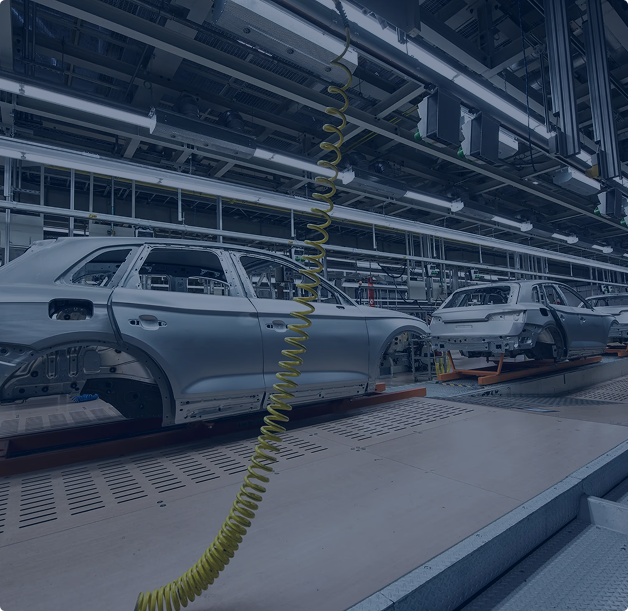
Why Should Automotive Manufacturers Invest in Water Treatment Solutions?
Automotive facilities have strict limits on what they can send to the sewer or discharge to surface water, set by the Clean Water Act and the National Pollutant Discharge Elimination System (NPDES).
But heavy metals like lead and mercury, oil and grease, and chemical residues from paint and coating processes all fall under federal and state reporting thresholds. You could face fines, lose permits, or even have your facility shut down if you exceed those limits.
Compliance aside, there’s the cost appeal of investing in superior water treatment solutions for automotive manufacturers. Water is a significant cost, and it gets consumed in high volumes during painting, metal finishing, cooling, and part degreasing. You can recover and recirculate some of the water you use with the right automotive wastewater treatment system.
Common Automotive Wastewater Treatment Solutions We Specialize In
bioprocessH2O has helped design and implement hundreds of water treatment solutions, many of which were specifically tailored to the unique requirements of automotive manufacturing. We know as well as anyone that the contaminants in automotive effluent can vary by process.
- Metal finishing generates heavy metals and acids
- Paint operations produce suspended solids and solvents
- Washing stations create oils and detergents
There’s a treatment technology for every stage of the waste stream in your business.
Dissolved Air Flotation (DAF)
A DAF system puts micro-bubbles into the wastewater stream to remove oils, grease, and suspended solids. The bubbles lock onto contaminant particles and float them to the surface where they’re physically removed by a skimmer. DAF is usually the first treatment stage for automotive facilities that incur paint solids, coolant residues, and oily wash water.
Membrane Bioreactor (MBR)
MBR combines biological treatment with membrane filtration in one compact unit for facilities that have limited floor space but incredibly tight standards for effluent quality. Bacteria break down dissolved organics in the reactor while solids, metals, and contaminants are all rejected by ultrafiltration membranes. You’re left with effluent so clean it can be fed right back into a reuse loop or meet NPDES discharge limits without the need for any extra polishing.
Moving Bed Biofilm Reactor (MBBR)
MBBR uses plastic media carriers consisting of dense microorganism colonies to handle the biological treatment stage. The carriers are suspended in an aerated tank where they break down BOD, COD, and nitrogen. No membrane component needed. MBBR is a good fit for automotive facilities with variable production schedules since the biofilm regulates itself based on the incoming load. It won’t stall during slow periods or fall short during peak production.


Benefits of Partnering With bioprocessH2O to Treat Automotive Wastewater
Off-the-shelf treatment systems just don’t account for the level of variability that comes with automotive effluent: metals, organics, oils, and chemical compounds all fluctuate depending on which production line is running. That’s why every automotive wastewater treatment system we build at bioprocessH2O starts with a detailed analysis of your waste stream:
- Flow volumes
- Peak loading conditions
- The specific contaminants at each discharge point
Everything is manufactured in-house at our Portsmouth, RI facility, where we have strict quality control standards in place to ensure you get a system you never have to stress about.
You’ll work with the same team from design to fabrication, programming, and commissioning. This means you’re not chasing subcontractors down if a parameter needs to be adjusted six months after installation. We’re here for you long after the fact to keep everything running smoothly. Your operators and our support team are able to track performance in real time with automation and remote monitoring capabilities.
bioprocessH2O has brought more than 250 systems up to speed across North America, and we’re passionate about empowering automotive operations to remain productive while staying compliant. Take the next step by requesting more information today!
Frequently Asked Questions
It can take as many as 39,000 gallons of water to get a vehicle on the road. That covers everything from painting to cooling, metal finishing, parts washing, and general facility operations. As you can imagine, most of that water picks up contaminants along the way and needs to be treated before discharge/reuse.
The EPA enforces the Clean Water Act while NPDES permits set facility-specific discharge limits based on what’s in your water and where it’s going. There are also state environmental agencies and local publicly owned treatment works (POTWs) with their own pre-treatment requirements. There are a lot of bodies to appease, so automotive wastewater treatment systems are held to some of the strictest standards in the world.
Most of the wastewater treatment programs we design for automotive facilities use multiple technologies. DAF for oils and suspended solids and either MBR or MBBR to break down dissolved organics after the fact. We’ll help you design the perfect system based on your contaminant profile, volume, and whether you need reuse-quality effluent or just compliant discharge.
The best thing you can do is treat process water to reuse standards with MBR systems so you can recirculate it rather than pulling fresh water for every cycle. It’s worth setting up closed-loop systems for cooling and rinsing stages, too.
We design, build, and support everything under one roof. No third-party fabricators, outsourced controls, or handoffs between vendors. Your system gets engineered for a hyper-specific waste stream and production schedule, so it runs as smoothly and efficiently as possible. From automotive to food & beverage industry wastewater treatment, wastewater treatment for manufacturing, and pharmaceutical industry wastewater treatment, we do it all!

Applicable Solutions

Largest Soft Drink Producer

Landfill Leachate

Potato Processing Plant

Letterkenny Army Depot

Cheese Producer

Looking by contaminant?