PFAS Treatment for Landfill Leachate

Remove PFAS from leachate and keep meeting your BOD and ammonia limits, with the most extensive landfill leachate treatment experience in the United States.
Landfill Leachate Wastewater Treatment

Why leachate is the hard case

PFAS is in nearly all of it

An EPA study of more than 200 landfills found PFAS in the leachate at over 95% of them.
Source: U.S. EPA, Effluent Guidelines Program Plan 15, 2023.

Leachate is hard on PFAS treatment

High ammonia, organics and dissolved solids foul membranes and use up carbon fast unless they are removed first.

Disposal options are narrowing

Treatment plants are getting harder to send leachate to. Maine bars its state-owned landfills from sending leachate to a plant unless PFAS is reduced first, and New Hampshire lets plants refuse discharges over their own PFAS threshold.

The treatment train for leachate

Biological treatment clears the way, then membranes and carbon take out the PFAS.
Raw leachate
From the collection system
Equalization
Evens out flow and strength
MBR
BOD, ammonia and solids
Reverse Osmosis
PFAS and dissolved solids
Carbon polish
Where the limit calls for it
Discharge
Within your permit
Concentrate from the membranes goes back to the landfill.

What each stage does

bioFLOW MBR

Removes the BOD, ammonia and solids that would foul the PFAS step.
At a New England landfill: BOD 2,093 to under 20 mg/L, ammonia 1,483 to under 5 mg/L, TSS 660 to under 10 mg/L.

Reverse osmosis or nanofiltration

Holds back PFAS along with dissolved solids. EPA research finds these membranes typically remove more than 90 percent of a wide range of PFAS, including shorter-chain compounds. Nanofiltration is the lower-pressure choice where full salt removal is not needed.

Activated carbon

Polishes the membrane permeate where the limit calls for it. It works best on longer-chain PFAS such as PFOA and PFOS.
Membrane and carbon performance: U.S. EPA, Reducing PFAS in Drinking Water with Treatment Technologies.

Managing the concentrate

Reverse osmosis and nanofiltration leave a concentrate that holds the PFAS. What you do with it is part of the design.

Back to the landfill

On every leachate project we have delivered, the concentrate has been returned to the landfill. The PFAS stays on site instead of leaving with the treated water.

Worked out up front

How much concentrate the membranes produce, and how it is returned, is settled with your site and your permit before the system is built.

Where landfills stand on PFAS rules

Federal

EPA said in January 2023 that landfills need PFAS discharge limits, after finding PFAS in leachate at more than 95% of the landfills it studied. As of November 2026 it had not proposed them.

State

States are acting on their own. Maine bars its state-owned landfills from sending leachate to a treatment plant unless PFAS is reduced first, and since 2025 requires landfills to test their leachate for PFAS and report the results.

Treatment plants

The plant that takes your leachate can set its own terms. New Hampshire lets plants require PFAS testing and refuse discharges above their own threshold, and many plants will not accept leachate until it has been treated on site.
Reviewed November 2026. PFAS rules change often, so confirm current requirements with your regulator. Sources: U.S. EPA; Journal of the New England Water Environment Association.

Landfill results

bioprocessH2O has the most extensive landfill leachate treatment experience in the United States.

Landfill leachate, New England

A bioFLOW MBR feeding reverse osmosis, treating 289,300 gallons per day. More than 99% of BOD and ammonia removed.
BOD 2,093 to under 20 mg/L. Ammonia 1,483 to under 5 mg/L. TSS 660 to under 10 mg/L.

Hauled leachate, centralized facility

A bioFAS system at a centralized facility that treats hauled leachate and industrial waste.
More than 80% COD removal at 42,000 gallons per day.

Start with a pilot

Test the train on your own leachate before you commit to a full system.

Lab testing

Our lab profiles your leachate. PFAS itself is measured by an accredited lab using EPA Method 1633.

Pilot studies

Run a pilot system on your own leachate and see the results first.

MBR pilot systems

Pilot-scale MBR equipment for testing on your own leachate.
FAQs

PFAS in leachate questions

Can PFAS treatment be added to our existing leachate plant?

Usually, yes. PFAS removal goes after biological treatment, so membranes can be added downstream of the MBR or MBBR you already run. Our systems are modular, so steps can be added as limits change. We start from your flow, your current effluent and the space on site.

Does our MBR already remove PFAS?

No. An MBR removes BOD, ammonia and solids, but PFAS passes through it. The MBR still matters, because it protects the membranes and carbon that do the PFAS removal.

What happens to the RO concentrate?

It goes back to the landfill. Every leachate system we have delivered returns the concentrate, so the PFAS stays on site instead of leaving with the treated water.

We haul our leachate today. Does on-site treatment make sense?

For most landfills, yes. Hauling is expensive and depends on a treatment plant that will keep taking your leachate, and more plants now want it treated first. Treating on site gives you control of the cost and the outlet. Lab testing and a pilot show what your leachate needs before you commit.

What PFAS limits should we design for?

EPA has not set federal PFAS limits for landfill discharges, so the number comes from your state permit or from the plant that receives your leachate. Limits are still tightening. Reverse osmosis and nanofiltration remove a wide range of PFAS, and a modular system leaves room to add polishing later.

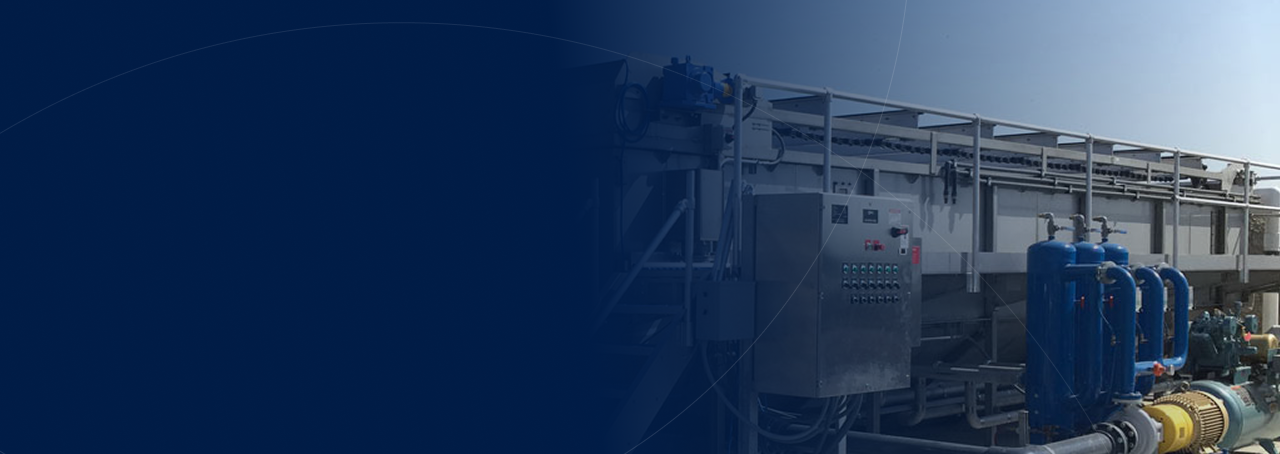
Water treatment equipment with blue pressure vessels, piping, and a control panel.
24/7 availability for critical support

Connect with Our Expert Engineers Today and Find Solutions for Your Wastewater Challenges