Wineries

Why Invest in Winery Wastewater Treatment?
Wineries produce wastewater at every stage: crushing, pressing, fermentation, barrel and tank washing, and bottling. But there are nuances in each step. For example, wastewater volumes can increase several times over baseline during crush season, and BOD concentrations can get as high as 8,000 mg/L.
BOD aside, here are some more reasons you need a winery wastewater treatment system:
- Suspended solids from grape skins, seeds, lees, and pulp residuals. Concentrations can exceed 1,000 mg/L
- Fats, oils, and grease from pressing and processing operations
- Nitrogen and phosphorus from yeast metabolism and cleaning agents
- Dramatic pH swings from acidic grape must and juice on one end and alkaline cleaning and sanitizing chemicals on the other
Discharging untreated winery effluent violates both state and federal regulations. There are strict limits on BOD, TSS, and nutrients per NPDES surface water permits. Even those who send wastewater to a municipal sewer system have to pretreat it or face high surcharges.
There’s a practical case, too. You know all too well how much water your winery uses, from growing the grapes to washing equipment/barrels, rinsing tanks, and cooling fermentation. A good treatment system for winery wastewater allows you to reuse some of this water.
What Separates bioprocessH2O From Other System Providers?
Every winery wastewater treatment system we build starts by analyzing the facility’s actual wastewater data rather than making assumptions and pulling from a product catalog. Our treatment trains get configured around the specific contaminant profile, seasonal flow patterns, and specific discharge/reuse targets of the facility in question.
Design, fabrication, installation, and ongoing support are all handled under one roof, so your system is never passed around among contractors. You work with the same team from A to Z. Here’s why wineries trust our systems over the competition:
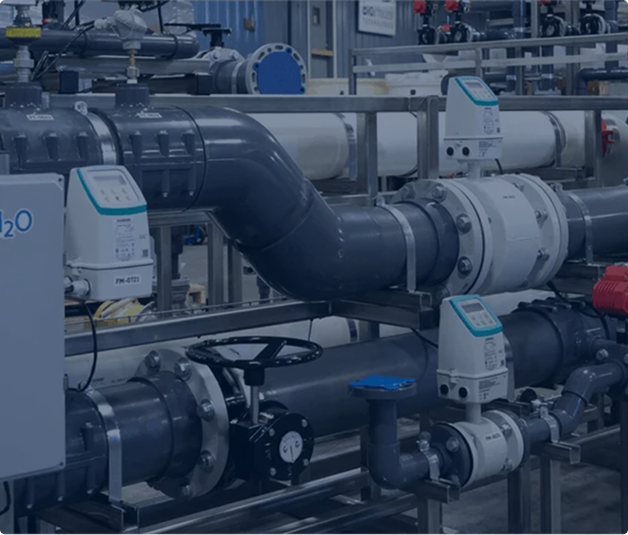
Containerized bioPULSE MBR
A California winery depends on our containerized bioPULSE airlift MBR to process 8,000 GPD of production wastewater. The whole system is containerized and deployed to the site without permanent construction.
It uses fully backwashable, energy-efficient external tubular membranes to keep maintenance manageable - even despite the high-solids loading that comes with winery effluent. The performance from this installation has been nothing short of impressive:
- BOD brought down from 8,000 mg/L to just 5 mg/L (99% removal)
- TSS reduced from 1,300 mg/L to just 1 mg/L
- FOG from 150 mg/L to under 10 mg/L
- COD removal > 90%
Built for Seasonal Production Cycles
The heaviest waste load gets compressed into a short window during crush season, which is typically only a few months out of the year. Wastewater volumes surge while BOD and suspended solids spike. Then, both drop off for the rest of the year.
A treatment system locked into just one operating range will either fall short during harvest or sit oversized during the quiet months. bioprocessh2O develops modular systems equipped to handle variability without skipping a beat.
It all starts with a pilot study and lab analysis of your wastewater sample. Then, we can more accurately validate system size and treatment performance prior to full-scale fabrication.
Water Reuse Capability
Our systems can produce clean enough permeate for agricultural reuse, dramatically lowering a winery’s water bill. The treated water directly irrigates the vineyard after UV disinfection. This also cuts the need for permitted surface water discharge.


Begin Treating Winery Wastewater the Smart Way Today
We’re proud to have helped wineries across the country manage wastewater, ensuring compliance and cutting costs. Let us do the same for your operation.
Send us your wastewater data or let us run a pilot study to characterize it on-site. Then, we can quickly configure a winery wastewater treatment system based around your production volume, seasonal variation, and discharge/reuse goals. Take the next step today.
Frequently Asked Questions
Grape must, lees, yeast residuals, and cleaning chemicals. The main concern is BOD, which can exceed 8,000 mg/L during crush season. You also have to deal with suspended solids from grape skins and pulp, FOG from pressing operations, and nitrogen + phosphorus as fermentation byproducts. Then there are cleaning agents that add to the wastewater profile.
It’s rarely one treatment method in isolation. Most systems we develop start with screening to remove large solids, so that biological systems (be it MBR or MBBR) can break down dissolved organics and lower BOD to a more acceptable level. DAF systems can attack FOG and residual suspended solids. A lot of wineries invest in additional polishing so the water can be reused.
Yes - this is one of the best cases for investing in smarter winery wastewater treatment. It can quite literally pay for itself by lowering your fresh water needs. We’ve set up systems that support reuse goals for wineries and can do the same for you.
Yes. It’s one of our primary markets. We’ve deployed systems for dairy industry wastewater treatment, meat processing wastewater treatment, soft drink manufacturing, and potato processing operations. We’re the #1 choice for food & beverage industry wastewater treatment.
Connect with our team. We’ll ask about your wastewater profile, production volumes, and compliance targets. We might even request a lab analysis or set up a pilot study to get a better idea of what we’re working with. This way, you end up with a system tailored to your exact operation.

Applicable Solutions

Largest Soft Drink Producer

Landfill Leachate

Potato Processing Plant

Letterkenny Army Depot

Cheese Producer

Looking by contaminant?